

CORE MODULE
My Team and I
Science is a team sport. Yet we often view team leadership through the prism of hierarchy, functions, and formal roles. The reality is different. It is not the organizational chart that determines the quality of cooperation, motivation, and results, but everyday interactions between people.
Many leaders in science stand between two worlds. Upward, they face expectations of performance, grants, and results. Downward, they are responsible for people, their development, motivation, and a safe environment. This pressure is often invisible and difficult to share.
We perceive team leadership as the ability to create functional cooperation across roles, personalities, and levels of experience. It is about working with team dynamics, sensitively leading different people in different situations, and making conscious decisions about when to lead, when to support, and when to give space.
Strong teams do not happen randomly. They arise where leaders understand people, their needs, and their potential, and are able to work with this understanding over the long term.
Key Topics of the My Team and I Module
Expectations from Above and Below
How to deal with the differing expectations of the institution’s management and your own team? How to define a leader’s success not only in terms of performance, but also in terms of the quality of cooperation and the sustainability of the team?
Building a Team and Working with Potential
How to select people for your team not only based on their expertise, but also on their competencies, motivation, and potential? How to work with diversity in experience and work styles? How to think about team composition in the long term?
Motivation and Prevention of Frustration
What really motivates people in a team? How to recognize signs of decreasing motivation and frustration before they escalate into conflict or departure? How to create an environment where work is meaningful and people see their contribution?
The Psychology of Teamwork
How do team dynamics work? How do roles change over time? How can you work with unwritten rules and relationships, which often have a greater influence than formal arrangements?
Leadership Styles in a Team
How to choose the right leadership style in different situations? When is it appropriate to make decisions authoritatively and when is it better to involve the team? How to be conscious of your own style and its impact on others?
Safe Environment and Trust
How to create a team environment where people can talk openly about problems, mistakes, and uncertainties? Psychological safety as the basis for innovation, learning, and long-term cooperation.
Team Development over Time
How to support the growth of individuals and the whole team? How to work with different stages of team development? How to set realistic expectations and long-term goals?
Practical Work with the Team
Take advantage of the space for model situations, simulations, and specific examples from practice. How to transfer theory into the everyday reality of a scientific team?
Events
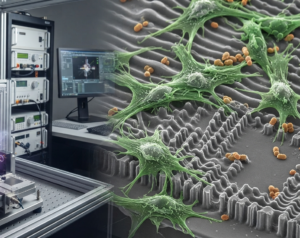 Lasers vs. Bacteria: Micro- and Nanostructured Surfaces for Biomedical ApplicationsTechnology Deep DiveOctober 20, 2026 – Laser processing offers a powerful way to tailor the surface of a material without changing its bulk properties. Explore how laser parameters translate into specific surface features and how these properties can influence biological response.Read more ↗︎
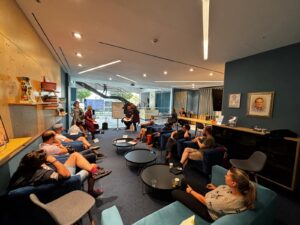 Case study: How does the HiLASE Centre develop its team leaders?Leadership BitesOctober 15, 2026 – Join us and take a look at a case study from the HiLASE Centre and the story of their Middle Management Academy – a development programme for team leaders, who form a bridge between the centre’s management and the individual teams.Read more ↗︎
 Leadership as a Craft: The Core Competencies of a LeaderWebinarNovember 3, 2026 – Leadership is not an intangible talent, but a craft with clear rules, tools and skills that can be learnt. This practical webinar will introduce you to a proven system for day-to-day leadership practice.Read more ↗︎